
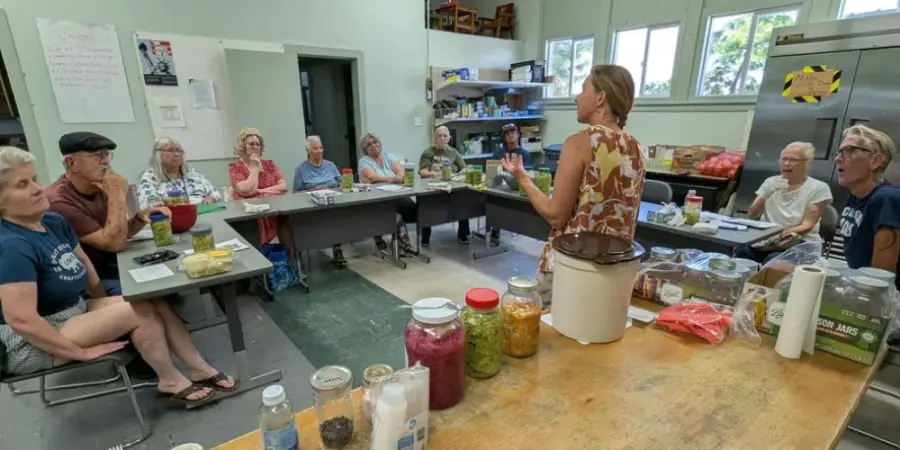
Food insecurity reaches beyond access to groceries. In many rural communities, long-term food stability also depends on knowing how to preserve ingredients, prepare balanced meals, and reduce waste at home.
That idea sits at the center of Siskiyou Food Assistance’s ongoing “Family Food Security and Nutrition” workshop, an eight-month educational program designed to teach sustainable food practices through practical, hands-on lessons.
Now in its second year, the program has seen a sharp rise in participation.
According to instructor Kelly Dearie, enrollment grew from 40% of pantry clients to nearly 90%. As attendance increased, classes moved to the Weed Community Center to accommodate larger groups and prevent overcrowding.
Hands-On Lessons Focus on Food Use
The workshop introduces participants to several food sustainability methods that combine traditional preservation techniques with modern nutritional knowledge. Lessons cover pantry organization, meal planning, food rotation, dehydration, fermentation, and solar cooking. The goal is to help families use available food efficiently instead of storing unused supplies for extended periods.
Kelly Dearie explained that food security involves more than simply having food available. “Food security is not only having food, it’s being able to utilize the food so it not just sitting in the basement for thirty years, you’re actually using it and preparing it properly,” Dearie said.
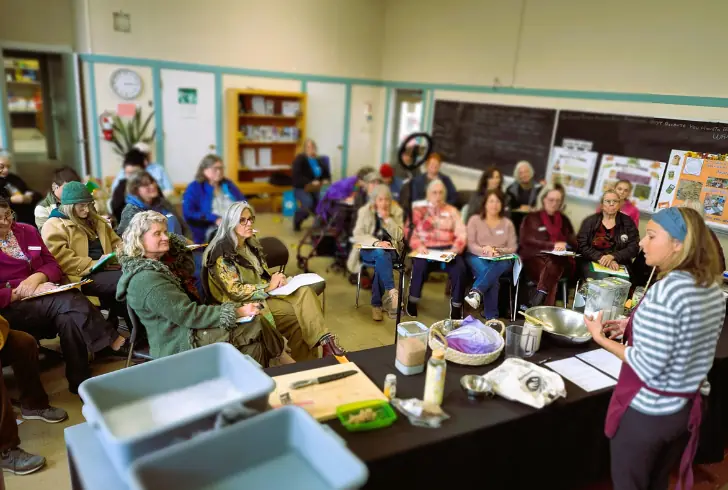
Classes also explore ways to create nutritious meals using limited resources, an issue that often affects rural communities where food access and availability can be inconsistent.
Growing Interest Encourages Digital Expansion
The response to the workshop continues to grow. Some participants have reportedly returned for a second round of classes, while others have started organizing community potlucks using techniques learned during the sessions.
Siskiyou Food Assistance plans to expand the program through a new digital platform funded by a grant from Common Spirit. The online format is expected to make the educational material available to a wider audience and improve access for residents who cannot attend in person.
The workshop remains free for SFA clients and volunteers. Community members outside the program are asked to contribute a $30 donation to help cover printed materials and classroom supplies. Even so, the organization stated that no participant will be turned away because of financial limitations.
Food education programs are gaining interest as communities look for practical ways to address food insecurity. Siskiyou Food Assistance helps participants build skills in food preservation, meal planning, and sustainable food use, supporting long-term food stability while reducing waste.