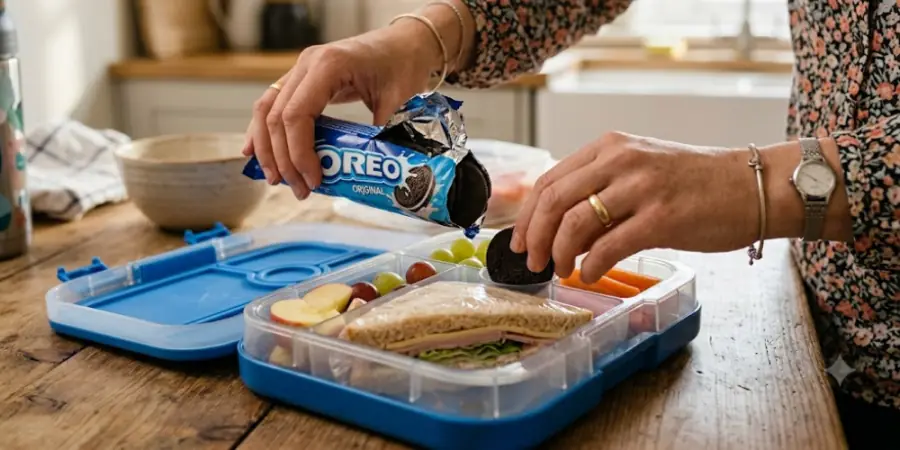
A simple Oreo cookie turned into an unexpected parenting dispute after one mother asked a school mom group to stop packing the popular chocolate sandwich cookies in their children’s lunches.
What began as a request about five-year-olds and lunchbox comparisons quickly became a tense group chat battle, a school complaint, and a viral social media spectacle now known as “Oreo-gate.”
The drama comes from a 10-part Instagram series created by AshleighJamz, a mom who turns moments from her hectic life into songs with Suno, an AI music generator. The fictionalized saga centers on six mothers and one increasingly controversial snack: Oreos.
The Oreo Request
The conflict started when “Michelle,” one of the mothers in the group chat, asked the others not to send Oreos, chocolate candy, or similar treats to school.
Michelle explained that her five-year-old daughter, “Ava,” does not eat those foods. She worried that seeing other children with Oreos could lead to lunch comparisons.
“I just wondered if we could agree not to send things like Oreos, chocolate candy, etc. so the kids aren’t comparing lunches?” Michelle wrote, according to Ashleigh’s original Instagram post, which reportedly attracted nearly 10 million views.
View this post on Instagram A post shared by ashleighjamz (@ashleighjamz)
The request immediately divided the group.
Casey responded, “I don’t really think can control what everyone else packs though.”
Charlotte was even more direct: “With respect, I am not changing my daughter’s lunch because your daughter wants an Oreo.”
Jenny dismissed the situation with, “This is getting ridiculous,” adding a laughing emoji.
Those replies set the tone for what followed.
The Dispute Gets Bigger
The other mothers did not agree to Michelle’s proposed cookie ban. Instead, the disagreement moved beyond the private group chat and into the school.
According to the viral storyline, Michelle asked school administrators to prohibit Oreos because she considered them a “restricted food.” The request did not receive the response she wanted.
The disagreement then became more personal. Michelle allegedly confronted the other mothers about allowing their children to bring Oreos and share them with Ava.
The situation took another unusual turn when Michelle allegedly went to the school and searched other children’s lunch boxes for Oreos. She also reportedly asked the teacher to keep Ava away from children who had the cookies during lunch.
That decision became the moment when the other parents appeared to push back in their own way.
Two Oreos Make the Point
The following day, the mothers reportedly packed two Oreos in their children’s lunches. One even chose the “Doubled Stuf” version, adding another layer to the growing feud.
The gesture quickly became part of the viral story. What started as a disagreement over one snack had turned into a larger discussion about parenting boundaries, food rules, childhood disappointment, and how much control parents should have over other children’s lunches.
AshleighJamz was not immediately available to respond to The Post’s request for comment.
Social Media Joins the Debate
Online reactions to “Oreo-gate” were just as divided and entertaining as the original group chat.
One commenter wrote, “Well Michelle, that sounds like a YOU problem. Also, I wasn’t going to pack Oreos for my kid, but I’ll make a special trip to the store to pick some up now.”
Another person took an even firmer position: “The audacity to even ask this. I would have simply said ‘No’, not respectfully. Y’all were too nice.”
The official verified account for the Oreo brand also joined the conversation, posting, “Oreo-gate was NOT on my 2026 bingo card.”
Some parents focused less on the cookie and more on the lesson children can learn from seeing foods they cannot have.
“Our job as a parent is not to control the environment so our kids never feel discomfort (re: remove Oreos),” one mother commented. “Our job is to help them ride through the disappointment/ envy they feel when others have things they don’t have.”
Another parent raised a concern about food restrictions, writing, “This level of control and anxiety around food is how kids end up bingeing at a friend’s house.”
A separate commenter had a much shorter response: “Tell her to buy her child a pack of Oreos and shut up.” The same commenter added, “These group chat sagas are why I would NEVERRR be in a group chat again!!”
Mom Group Chats Under Scrutiny
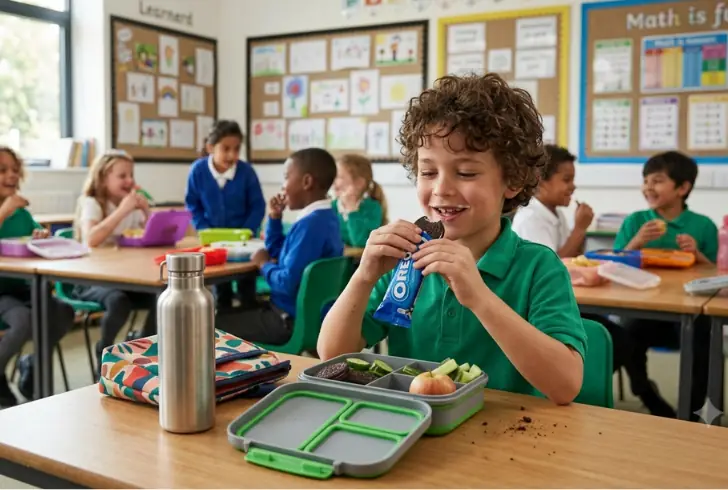
The Oreo argument also taps into a larger conversation about the pressure and conflict that can develop inside parent group chats.
Ashley Tisdale, known for “High School Musical,” previously criticized what she described as the “toxic” side of mommy messaging groups in January. The married mother of two publicly discussed being excluded from a former celebrity friend group, including being removed from its group chat and left out of social gatherings.
Parenting disputes also happen far beyond Hollywood. Izzy Anaya, 46, an Upper West Side mother of two, previously told The Post about feeling excluded by affluent mothers in her New York City neighborhood.
The difference with “Oreo-gate” is the unusually small trigger. A lunchbox cookie became the center of an argument involving parents, children, teachers, school administrators, and millions of online viewers.
Why Oreo-Gate Resonated
The Oreo dispute raises a broader question about parental boundaries. Parents can decide what their own children eat, but school lunches bring different food choices and family rules together. Children may naturally notice what their classmates have, which can lead to questions or feelings of disappointment.
That is what made Michelle’s request a larger parenting debate. Some parents argued that children should learn to handle seeing foods they cannot have rather than having those foods removed from everyone else’s lunches. Others may see food restrictions as a personal family matter that deserves consideration.
“Oreo-gate” gained attention because a simple lunchbox request quickly turned into a dispute involving parents, the school, and social media. The episode shows how easily disagreements in parent group chats can grow when different views about children, food, and boundaries collide.