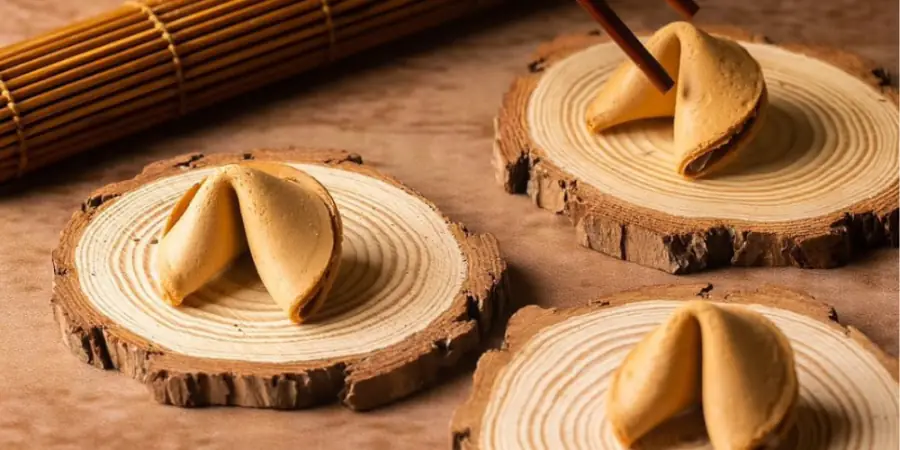
Fortune cookies often arrive at the end of a meal as a light, crunchy finish paired with a small slip of paper carrying a message meant to spark curiosity. While widely tied to American Chinese restaurants, their past carries a longer and more layered path that stretches across continents, cultural shifts, and centuries of food tradition.
What appears simple on the table carries a history shaped by migration, reinvention, and storytelling.
Across the United States, these cookies have become a familiar ritual in Chinese takeout meals, yet their origin story does not begin where many expect. The journey involves Japanese confectionery practices, early immigrant food cultures in California, and evolving interpretations that continue to shift today.
A Familiar Ritual in American Chinese Takeout
For many households, fortune cookies mark the closing moment of a takeout meal filled with dishes like lo mein, egg foo young, and General Tso’s chicken. In Philadelphia, chef Kurt Evans recalls how Friday nights often ended with Chinese takeout cartons and fortune cookies.
Inside each cookie, a folded slip of paper carried short messages or lucky numbers. Evans reflects on how these moments connected deeply with everyday life. He notes, “The lottery is very important in Black culture,” linking the tradition of lucky numbers with a broader cultural practice of hope and chance.
This early connection later shaped his culinary direction. Evans now runs Black Dragon, a Chinese takeout in Southwest Philadelphia, where traditional American Chinese food is reinterpreted with ingredients rooted in Black American cooking.
Inside the restaurant, dishes include collard greens folded into egg rolls, lo mein paired with gumbo, and “General Roscoe’s Chicken,” named after General Roscoe Robinson Jr., the first Black four-star general in the US Army.
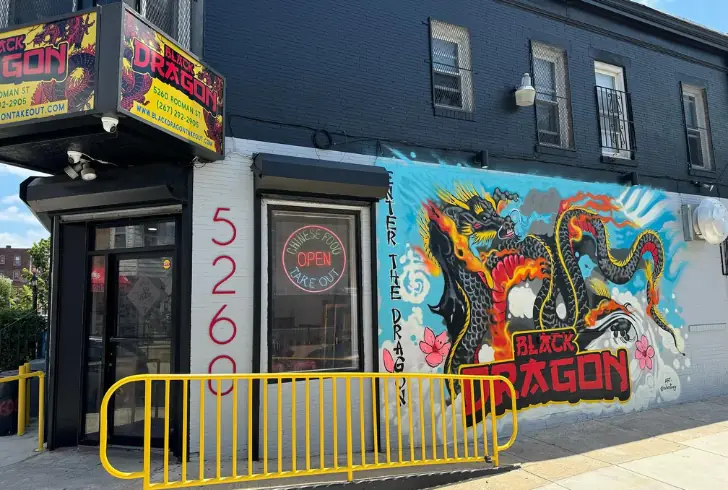
The space draws inspiration from the movie “The Last Dragon” (1985), reflected in its red and gold design. Evans describes the concept simply: “Black American Chinese food. I do that on purpose — to start a conversation.”
This idea extends to fortune cookies as well. Messages inside many of them are written by Evans, often inspired by cultural sayings and community reflections.
One widely shared line inside the cookies comes directly from his upbringing: “I brought you into this world, and I could take you out.”
Evans adds, “My mom said that a lot. Everyone I know grew up hearing some version of that.”
Where Fortune Cookies May Come From
Despite their association with Chinese cuisine in the United States, fortune cookies are not strongly rooted in Chinese culinary history. Research points instead toward Japan as a likely source of inspiration.
Japanese author Yasuko Nakamachi has studied fortune cookies since 1990. Her interest began after she encountered one while visiting New York and dining at a Chinese restaurant. The message inside struck her personally: “You are someone who finds beauty in small things that others do not notice.”
Her research later connected this experience to older Japanese confectionery traditions. She identified similarities between fortune cookies and tsujiura gashi, or fortune-telling sweets from Kanazawa in Ishikawa Prefecture. These treats used rice dough and carried small written fortunes inside.
Nakamachi also discovered Edo period illustrations from 1603 to 1868 showing folded senbei crackers with messages tucked inside. She noted that these early versions closely resemble modern fortune cookies in shape and concept.
She explains in her book “Tsujiura no bunka-shi” (“The Cultural History of Fortune Telling”), published in 2015, “Sometimes, there were slightly flirtatious exchanges, reflecting the culture of the red-light district then.”
These early versions were not just sweets but also social tools used in gatherings and public spaces. Messages included short proverbs, humor, and even lyrics from the time period.
From Japan to American Chinese Restaurants
The exact route of fortune cookies entering the United States remains debated. Some credit early Japanese and Chinese American businesses, including Fugetsu-do bakery and Hong Kong Noodle Company in Los Angeles. However, many historians point toward the Japanese Tea Garden in San Francisco as a major early influence.
At this site, fortune cookies were later produced in larger quantities by Benkyodo, a Japanese American confectionery company. Gary Ono, a descendant of the family behind Benkyodo, shared early manufacturing tools with researchers, including a metal mold used to shape cookies.
According to Nakamachi’s findings, these cookies were almost certainly influenced by Japanese traditions rather than originating independently in the United States.
Growth, Disruption, and Industrial Change
By the early 20th century, fortune cookies had become a standard feature in both Chinese and Japanese American restaurants. Chop suey houses often included them as a finishing touch after meals.
World War II disrupted production. Japanese American communities faced forced relocation into internment camps, which halted many Japanese-run factories. Chinese-owned manufacturers stepped in and continued production, helping spread the cookie’s presence across North America.
One of the largest modern producers is Wonton Food Company in New York. Meanwhile, San Francisco’s Golden Gate Fortune Cookie Factory, founded in 1962, remains one of the last places where cookies are still folded by hand.
In Canada, Wing Noodles, once Montreal’s oldest fortune cookie producer, closed in 2025 after more than eight decades of operation.
Craft, Reinvention, and Modern Identity
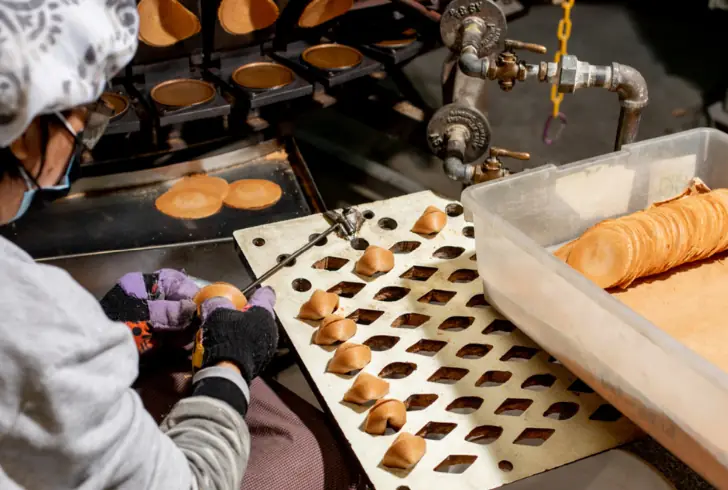
In Oakland, California, the Oakland Fortune Factory has revived interest in handcrafted fortune cookies. The factory, originally founded in 1957, saw renewed life in 2016 when it was purchased by Jiamin Wong. Later, her daughter Alicia Wong and her husband Alex Issvoran took over operations.
The production process still relies on traditional methods. Fresh cookies come out of industrial ovens and are folded by hand while warm. Issvoran explains, “Each new design has to have a really strong meaning behind it.”
Modern variations include chocolate-dipped cookies and seasonal designs. The factory has also collaborated with cultural projects and entertainment writers, including contributions from the team behind “Rick and Morty”.
During major social movements, the factory introduced themed cookie messages. In 2020, during Black Lives Matter protests, “solidarity cookies” were created featuring quotes from civil rights leaders. In 2022, a series supporting the Stop Asian Hate movement followed.
Issvoran shares, “After the cookies came out, I got a few calls from customers we didn’t know. They said they cried when they opened the cookies.”
He adds, “Sometimes we get to be a part of moments like these.”
Cultural Meaning Behind a Simple Cookie
Fortune cookies have grown into something larger than a dessert item. They function as small carriers of humor, reflection, and shared experience. Nakamachi observes how their American version differs from Japanese tradition, stating, “American fortune cookies have taken on a form quite different from their Japanese counterparts.”
She also explains, “In Japan, tsuji-ura senbei were also a kind of communication tool, shared with people around you for fun. But I think Americans have gone even further, embedding messages that actively influence and reach out to others.”
This shift reflects how a simple treat became part of everyday communication across cultures.
Fortune cookies continue to hold a unique place in food culture, shaped by centuries of adaptation and cross-cultural exchange. From Edo-period Japanese sweets to American Chinese restaurants, their path reflects a blend of craftsmanship, migration, and reinvention.
Whether folded by hand in a small bakery or produced in modern factories, each cookie carries a brief message that invites pause, reflection, and connection at the end of a meal.