Food insecurity continues to affect thousands of college students across the United States, making access to fresh and nutritious food a growing concern on many campuses.
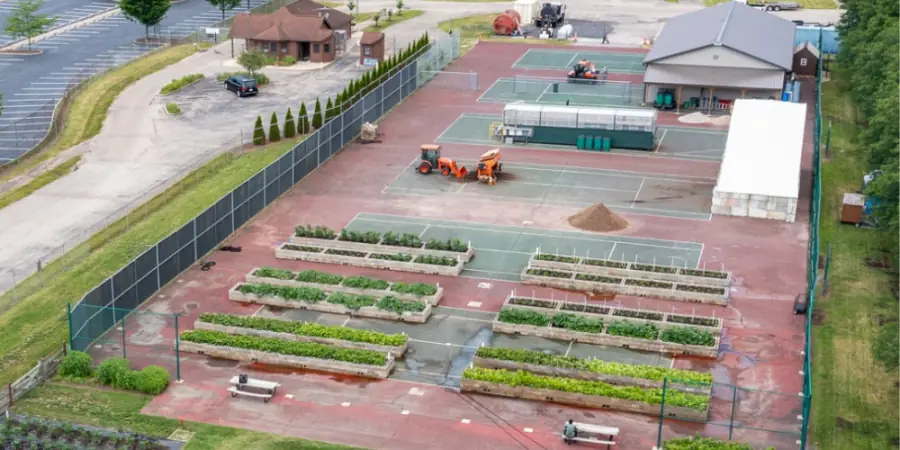
The University of Dayton has responded with an idea that serves both students and the local community. Its Flyer Farm turned six former tennis courts into a productive urban farm that supplies fresh produce, supports sustainability, and creates valuable learning opportunities.
The project shows how unused campus space can become a practical solution for addressing hunger while giving students real-world experience.
A Campus Farm With a Bigger Purpose
Located beside the University of Dayton on land once owned by Fortune 500 company NCR Corp., Flyer Farm started in 2017 with only a handful of garden beds. Since then, it has expanded into a fully operating urban farm featuring more than 30 garden beds, an orchard, beehives, and chickens.
Student workers manage the farm’s daily activities, including planting, watering, weeding, harvesting, and maintaining the growing areas. Another student-led group collects food scraps from residence halls and campus offices to support the farm’s composting program.
Along with growing vegetables, the farm produces eggs from its chickens and honey from its beehives. Honey is sold through the university bookstore, while most of the farm’s produce is donated to organizations serving people facing food insecurity.
Students Gain Practical Experience
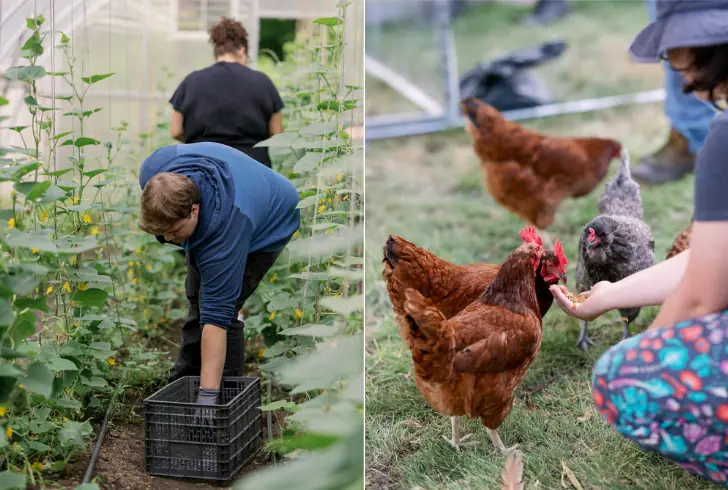
Flyer Farm offers much more than fresh food. It also serves as an outdoor classroom where students from different academic backgrounds develop practical skills.
Mechanical engineering technology student Zac Kissell joined the farm while searching for a summer job in March. The experience changed his professional interests and encouraged him to consider careers that combine engineering with environmental responsibility.
Kissell explained:
“I can just look into making something that is going to be efficient for not only the environment but also society itself.”
The farm hires students through the Federal Work-Study program, giving many participants their first professional work experience. Students learn agriculture, composting, sustainability, teamwork, and daily operations that extend well beyond traditional classroom instruction.
Steve Kendig, Executive Director of Energy Utilization and Environmental Sustainability at the University of Dayton, oversees Flyer Farm. According to Kendig, the project began after students expressed interest in urban agriculture and composting.
He said:
“The whole reason that we were doing this was to demonstrate how you could take a site like a tennis court and build an urban agriculture site that was productive. So if you could do it on a tennis court, you could do it on a corner lot, or anywhere, and that’s what we try to do.”
Fighting Food Insecurity With Fresh Produce
Research conducted by two University of Dayton professors between 2017 and 2022 revealed that 36 percent of students experienced food insecurity during their time on campus. Those findings helped shape Flyer Farm’s growing community mission.
During 2024 and 2025 combined, the farm donated approximately 12,000 pounds of fresh produce to the university’s Food4Flyers pantry and Miami Valley Meals, a Dayton nonprofit that prepares meals for people experiencing food insecurity.
For Kissell, contributing to those efforts remains one of the most rewarding parts of working on the farm.
He shared:
“It’s really nice. I’m putting in all this time, and knowing that this is going to people that need food, it’s better than just knowing that it goes to waste or to a store, just for it to sit there on a shelf. This is going to a food bank that’s getting prepped for meals, and those meals are going out to people that truly need it and want it.”
Sustainability That Supports Itself
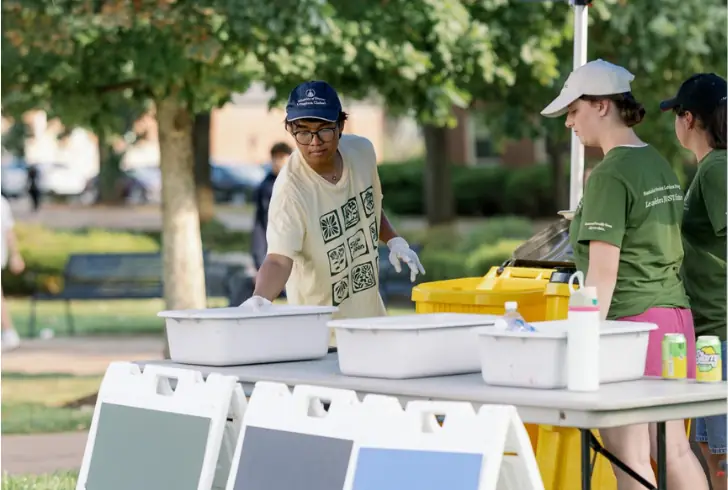
The farm also delivers measurable environmental and financial benefits. In 2025, its composting program diverted more than 100 tons of food waste from disposal. According to University of Dayton spokesperson Meagan Pant, that effort saved the university thousands of dollars in waste management costs.
Dining services also benefit from the composting initiative, which reduces disposal expenses by roughly $30,000 every year. At the same time, revenue from honey sales covers the ongoing cost of maintaining the farm’s beehives.
The operation largely funds itself. Initial support came from the Hanley Sustainability Institute, while additional equipment, chicken feed, and trees have been provided through donor contributions. Flyer Farm has also received grants from the Environmental Protection Agency, the Montgomery County Solid Waste District, and PepsiCo.
Kendig summarized the farm’s financial approach by saying:
“Everything we do, we try to do as efficiently and low cost as possible, and with some donors, we get by.”
Expanding Partnerships and Inspiring Campuses
Flyer Farm continues to build new community partnerships.
One recent collaboration involves Sinclair Community College’s English as a Second Language program. The initiative will dedicate garden space where immigrant and refugee students can grow vegetables native to their home countries.
In addition, two horticulture interns from Sinclair Community College are working at Flyer Farm during the summer.
The project’s success has also attracted attention beyond Dayton. Representatives from Miami University and the University of Cincinnati have visited the farm to study its operating model and explore similar programs on their own campuses.
Officials from Columbus also toured the site to evaluate its environmental impact before supporting a comparable local initiative.
Flyer Farm demonstrates how creative use of existing campus space can address several challenges at once. The project helps reduce food insecurity, cuts food waste, lowers operating costs, and gives students meaningful hands-on experience that connects education with real community needs.
Its continued growth and expanding partnerships show how urban agriculture can become a practical model for colleges looking to strengthen sustainability while supporting both students and local residents.